Agentic AI

As a Frontend Web Developer, I bring a unique blend of technical expertise and creative vision to design and implement robust web applications. My proficiency in core web technologies including HTML, CSS, and JavaScript, combined with hands-on experience in React and NodeJs, allows me to deliver high-performance, responsive, and intuitive user interfaces. I am also dedicated to continuous learning and community engagement, regularly publishing technical blogs to share insights and foster collaborative growth.
When people talk about AI these days, most of them mean generative AI🧠—tools like ChatGPT, MidJourney, or others that create text, images, or even code. These are amazing, but they also have big gaps. To understand Agentic A🤖I, we first need to see where generative AI stops.
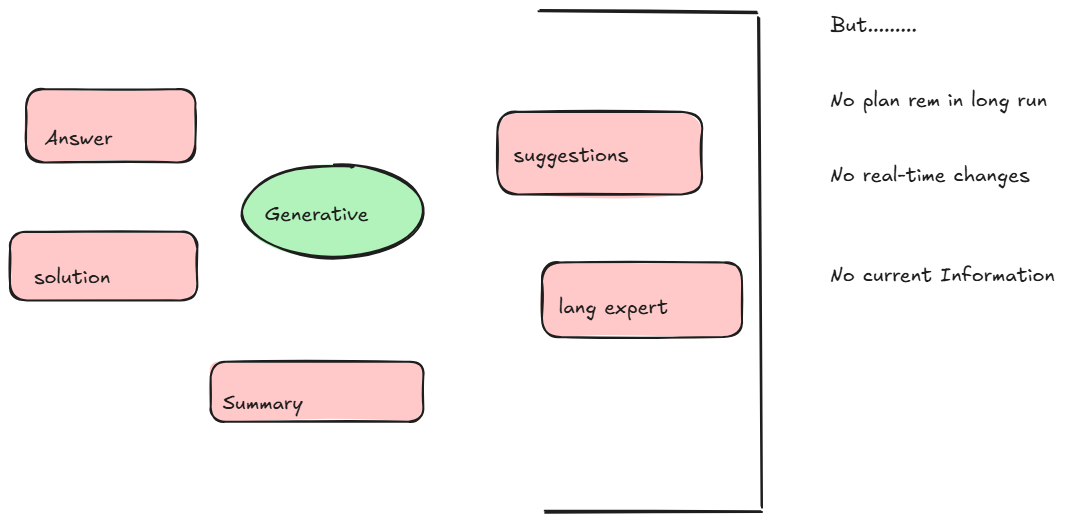
But Where Generative AI Falls Short😔
Generative AI is like a super-smart friend who can answer any question instantly but doesn’t step outside the room to actually do things.
It gives you answers, summaries, and suggestions but doesn’t go take action on them.
Example: If you ask it to book you a flight, it’ll tell you how to book one, but it won’t go to a travel website and book it for you.It doesn’t remember or plan across long tasks.
Example: If you tell it, “Help me plan my business for the next 6 months,” it’ll write a beautiful plan. But it won’t stick around for 6 months to remind you, track progress, and adapt the plan.It doesn’t handle real-time changes in the world.
Example: If you’re running late to a meeting, it can suggest what to do. But it won’t call the office, reschedule the meeting, and text the participants for you
What change after Agentic AI⚡
The word “agentic” simply means “acting with agency”—not just talking but doing.
Think of it as the difference between:
A map app that shows you the route vs.
A personal driver who takes the car, follows the route, adjusts for traffic, and gets you there.
Agentic AI is the driver. It doesn’t stop at telling you what to do—it goes and does it.
But How
Takes Actions on Your Behalf
It can book tickets, send emails, update calendars, or order items online, not just suggest them.Plans and Adapts in Steps
Instead of one-shot answers, it breaks problems into smaller steps and solves them one by one. If one step fails, it tries again.Connects with Real Tools and Data
It doesn’t live in isolation. It can connect with your apps, databases, or sensors and act based on fresh information.Learns from Feedback
If its first try doesn’t work, it can learn and adjust. Just like a human assistant would.
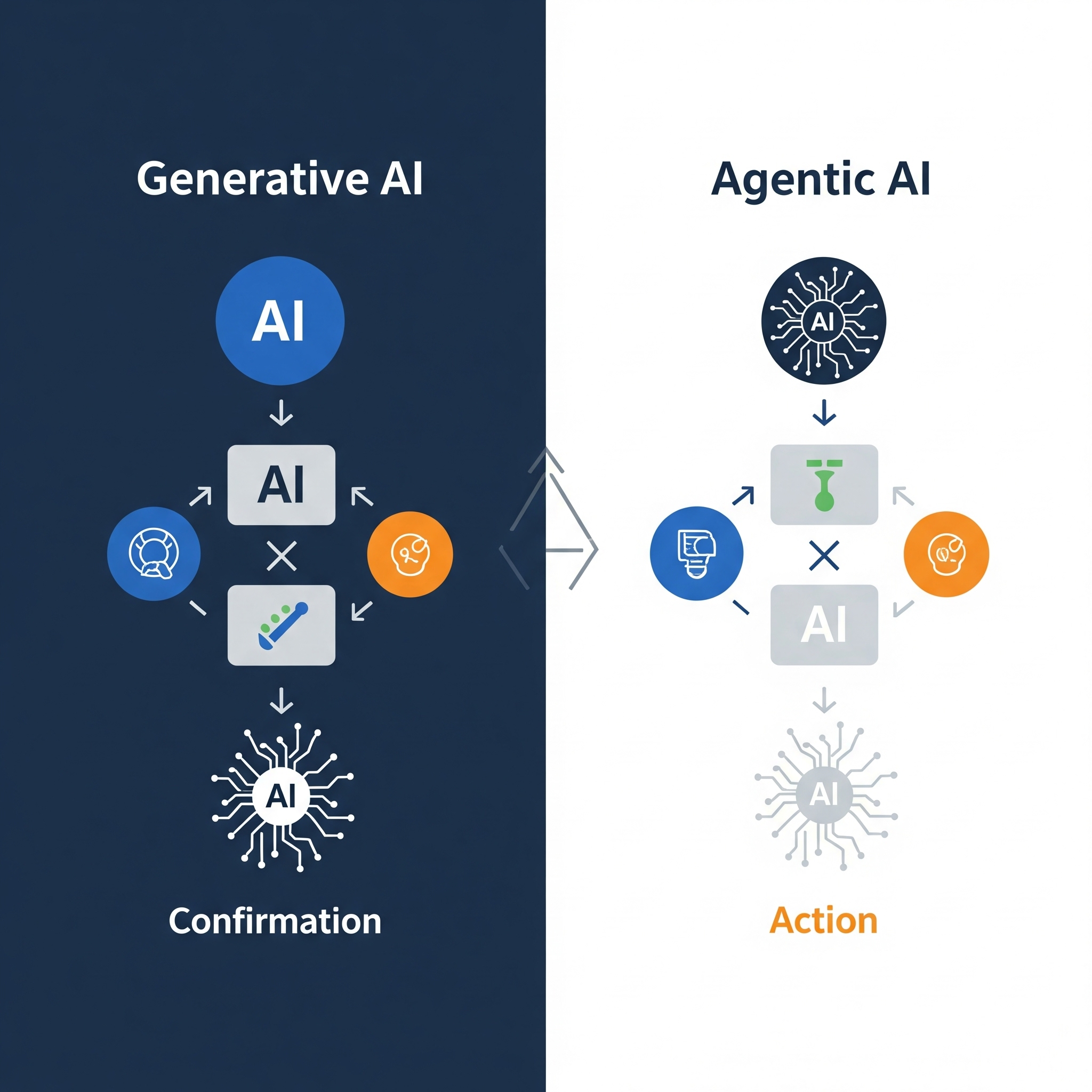
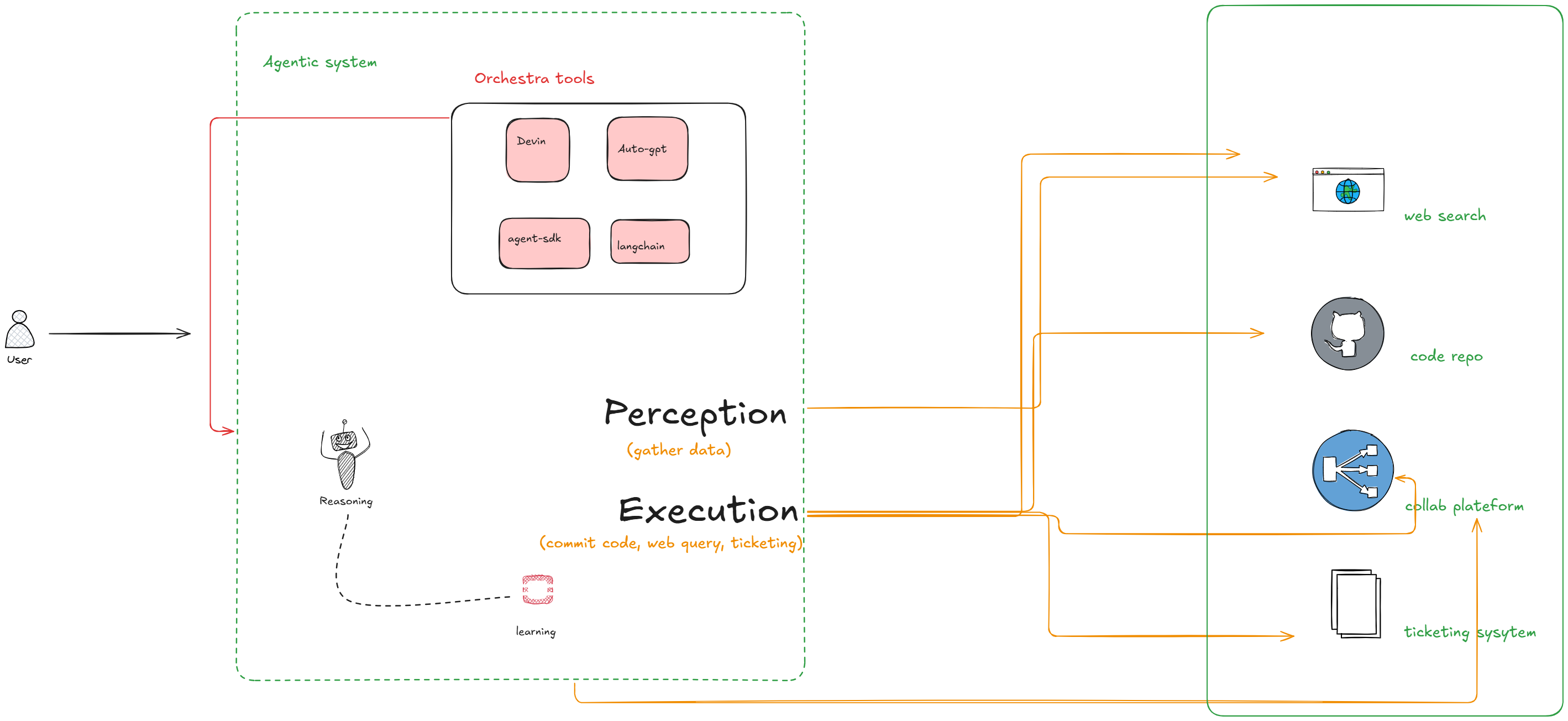
Agents are not reacting, but they are perceiving, reasoning, and learning to achieve rich results running like a game plan. Here is why it matters now - with tools like Devin and Langchain. We can see agents who write code, solve tickets, and collaborate all with minimal human input.
More Examples for clarity:
Generative AI Example: You ask it, “What should I eat today?” It lists 10 healthy recipes.
Agentic AI Example: You ask it the same, and it actually orders the groceries for one recipe, schedules the delivery, and sets you a reminder to cook.
Generative AI Example: You ask, “How do I learn Spanish?” It gives you a detailed study plan.
Agentic AI Example: It not only makes the plan but also signs you up for a class, sets daily reminders, and tracks your progress.
Generative AI Example: You say, “Help me invest.” It writes an essay about investment strategies.
Agentic AI Example: It connects to your broker account, analyzes your current portfolio, and makes trades based on your chosen rules.
Note
Generative AI opened the door—it showed us machines can talk like humans and create like humans. But talking isn’t enough. We need agents that can plan, act, and adapt in the real world.
That’s what Agentic AI is about.
The shift is simple to say but huge in impact:
From knowing to doing.
From advice to action.
From answers to agents.
Soon, we won’t just be asking AI for ideas. We’ll be delegating real work to it, the way you’d delegate to a human assistant. That’s when AI stops being just a tool—and starts being a more than a teammate.